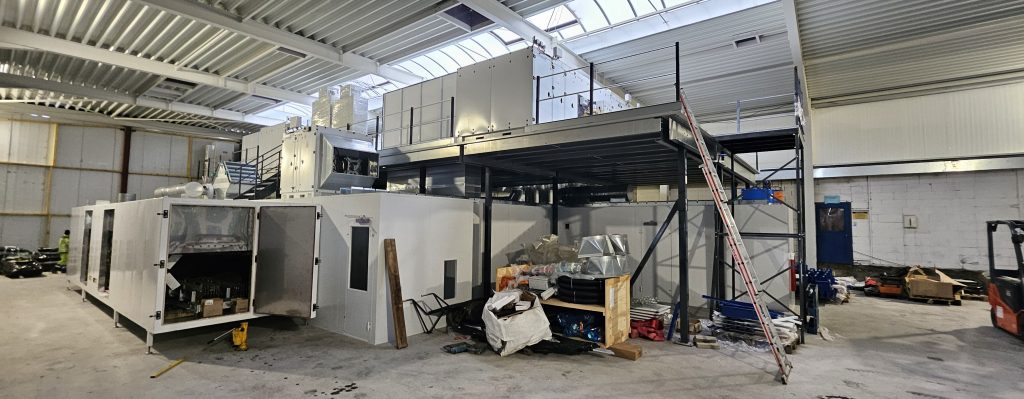
Paint booths and installations for industry
Few industrial parts need just one coat of paint. The real issue is the sequence of treatments.
In a body shop, the booth is the central station and everything is organised around it. In industry, that’s rarely the case: painting is one step among several, and it’s the sequence that determines the quality of the result as much as the application itself.
A part may need to be degreased, stripped, dried, primed, painted, then cured. Each step has its own requirements for air, temperature and cleanliness, and they aren’t compatible with each other. Making them share the same enclosure means accepting that each one is done badly.
The process shapes the installation
We don’t start from a catalogue of enclosures to see which one might suit you. We start from your process sequence, and the installation is its translation.
In practice, that means asking the questions in this order: what the part goes through, in what order, with what waiting times between steps, and at what throughput. Dimensions and equipment come afterwards — never before.
One step, one enclosure
when requirements are incompatible, mixing them means doing both badly
One enclosure, several steps
when throughput allows, it’s more compact and much cheaper. A booth that applies and then cures avoids a second enclosure and a transfer
Transfers matter as much as the stations
that’s often where time is lost, and where a freshly treated part gets marked
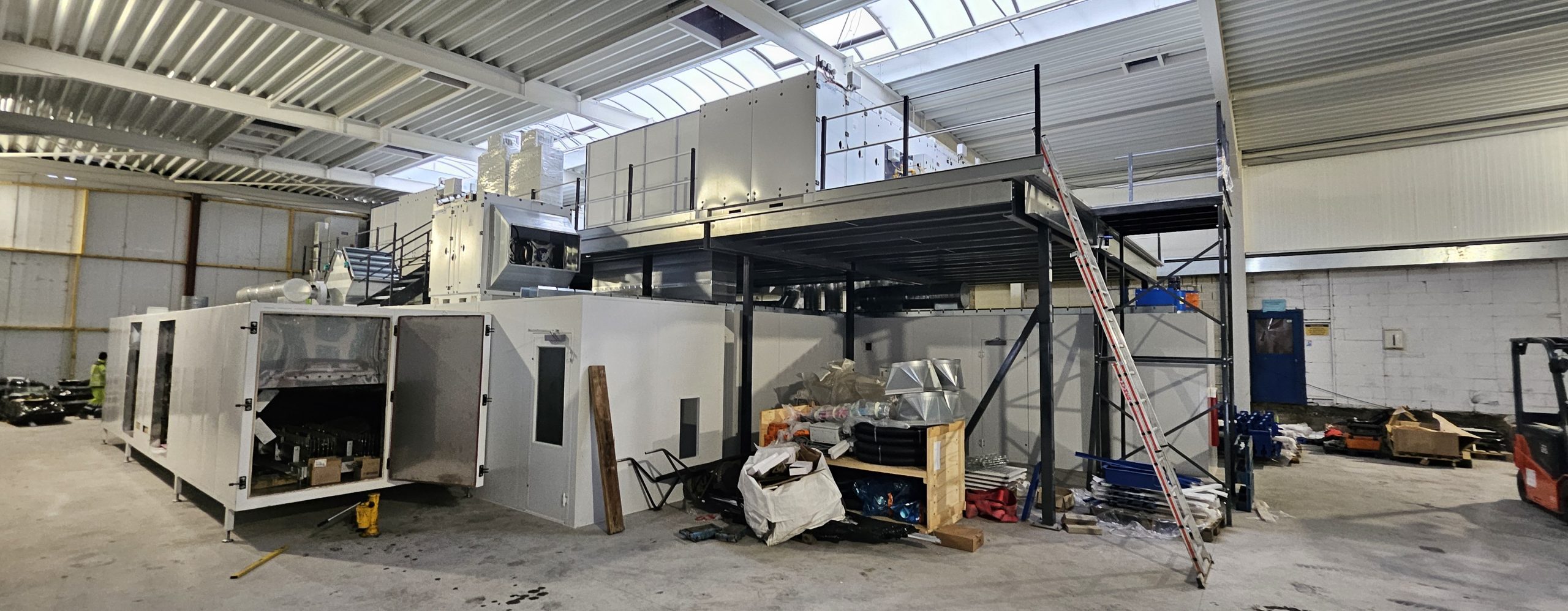
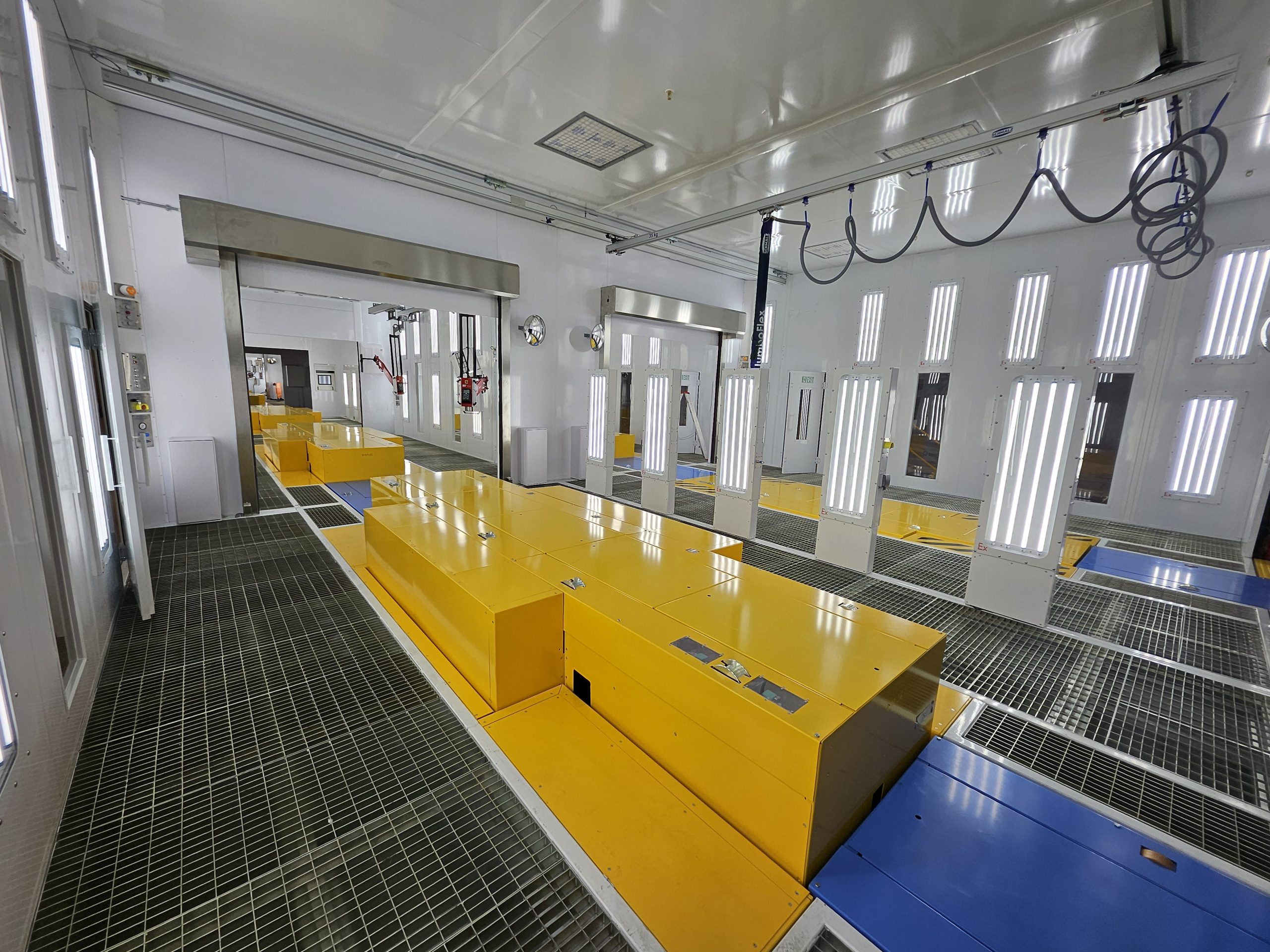
A booth, or an installation?
The answer comes down to a single criterion, and it isn’t budget: the number of times the part has to change state.
If you apply a product and leave it to dry, an industrial booth is enough, and it’s the most economical solution both to buy and to run.
If the part goes through several successive treatments, a booth on its own will force you to improvise the other steps elsewhere in the workshop — in other words, to make do, without capture or control. That’s where an installation is justified.
Frequently asked questions
What we are asked about industrial installations.
How is this different from your industrial booths?
An industrial booth is a single station: it applies and dries, sized to your parts. This page covers what happens when a single enclosure is no longer enough, because the part has to undergo several treatments. If your need fits in one station, the industrial booths page is the right one.
Can liquid paint and powder coating be combined?
Yes, and it’s common. The two processes need different enclosures — powder needs recovery and curing at temperature, liquid needs filtration and extraction — but they coexist well in the same installation, each with its own station. Several of our projects do this.
Does everything have to be installed at once?
No, provided it’s planned for. Reserving the space for a future station, sizing the ventilation and supplies for the complete installation, and keeping access clear: this costs little at the outset and avoids redoing everything. Adding a station to an installation that made no provision for it often costs more than the complete original installation would have.
Do you work on existing installations?
Yes, including ones we didn’t build. Adding an enclosure, upgrading ventilation that has become insufficient or replacing an ageing station is part of what we do. A preliminary audit establishes what can be kept — often more than you’d think.
Where are the installations built?
In our own workshop. The enclosures, walls, doors, ventilation and control cabinets all come out of it. That’s what allows us to design a station to the exact dimensions of your parts, and to remake a spare part ten years later instead of hunting for it at a supplier who has changed its range.
Tell us about your process sequence
What the part goes through, in what order, and at what throughput. That’s where the study starts — and it’s what will tell whether you need a booth or an installation.


