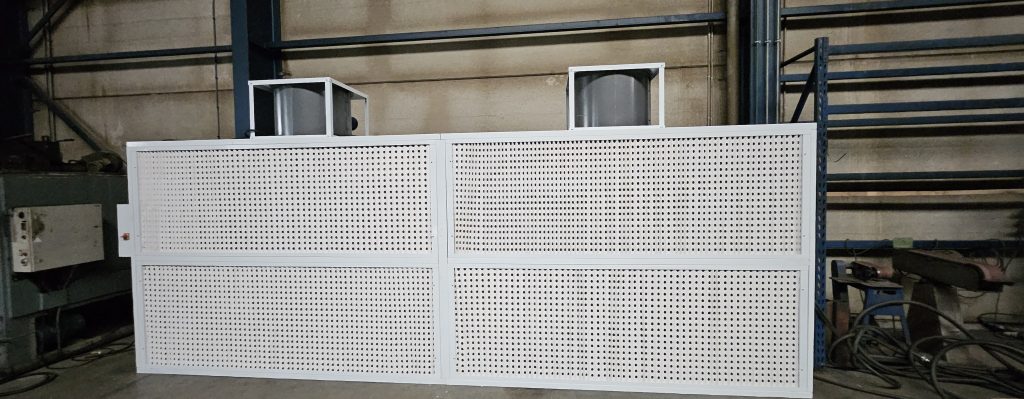
Paint extraction wall
Capture paint overspray where it is produced, without enclosing the workstation. For touch-ups, primers and parts that don’t fit in a booth.
The extraction wall is an open workstation that captures paint overspray at source, instead of letting it spread through the workshop. The laden air is drawn through the filtering wall facing the operator, then treated before discharge.
It’s the right answer when an enclosed booth is neither necessary nor possible: touch-ups, primers, large parts, preparation stations — or simply a workshop whose height and floor space don’t allow for a complete booth.
Extraction wall or booth: which one do you need
Both deal with the same problem — paint overspray — but they don’t meet the same need. The booth conditions the air; the extraction wall captures it. That’s the whole difference, and it decides the choice.
The booth is an enclosed space, under slight negative pressure as the standard requires, with filtered and often heated air: essential as soon as the finish demands a controlled environment. The extraction wall encloses nothing: less floor space, free access for bulky parts, simpler to install — but no dust control and no curing.
Touch-ups and one-off jobs
the extraction wall is enough, and frees up the booth
Long or bulky parts
those that don’t fit in a booth go in front of a wall
Primers and preparation
upstream of the booth, without tying it up
Demanding finish, delicate colours
here, you need an enclosed booth
Curing or accelerated drying
impossible on an open workstation
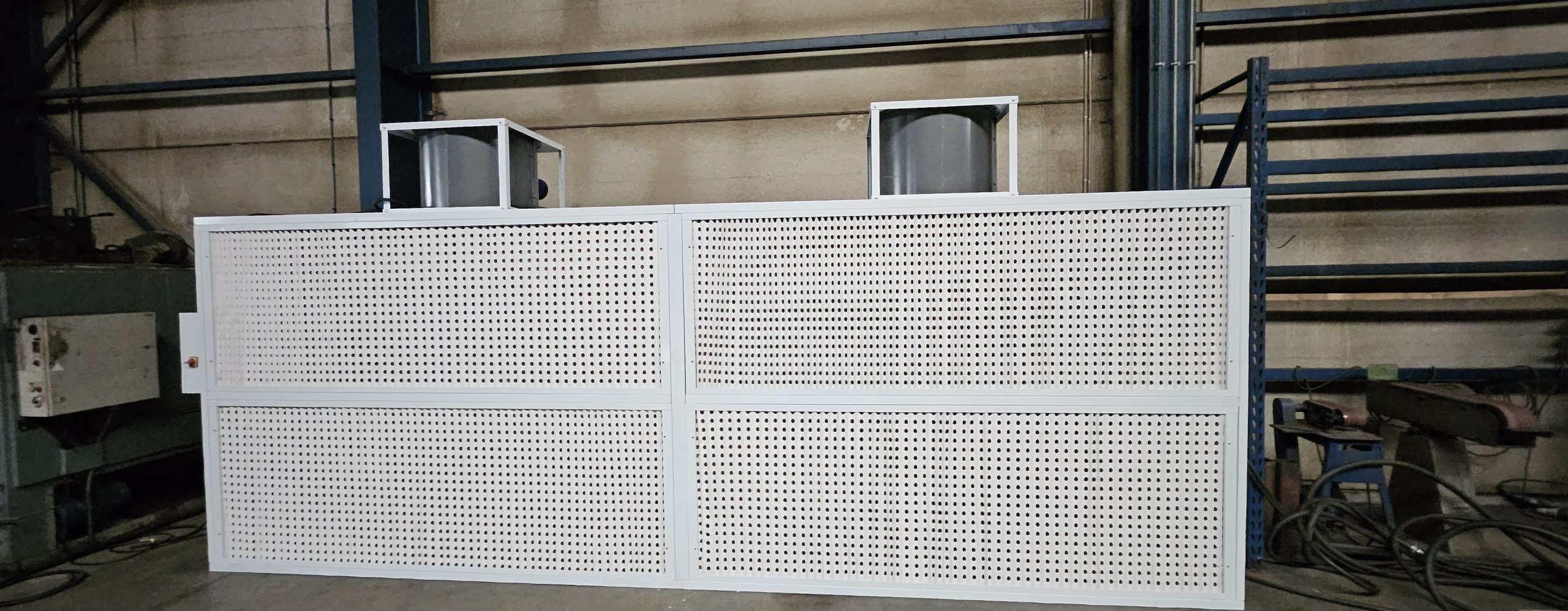
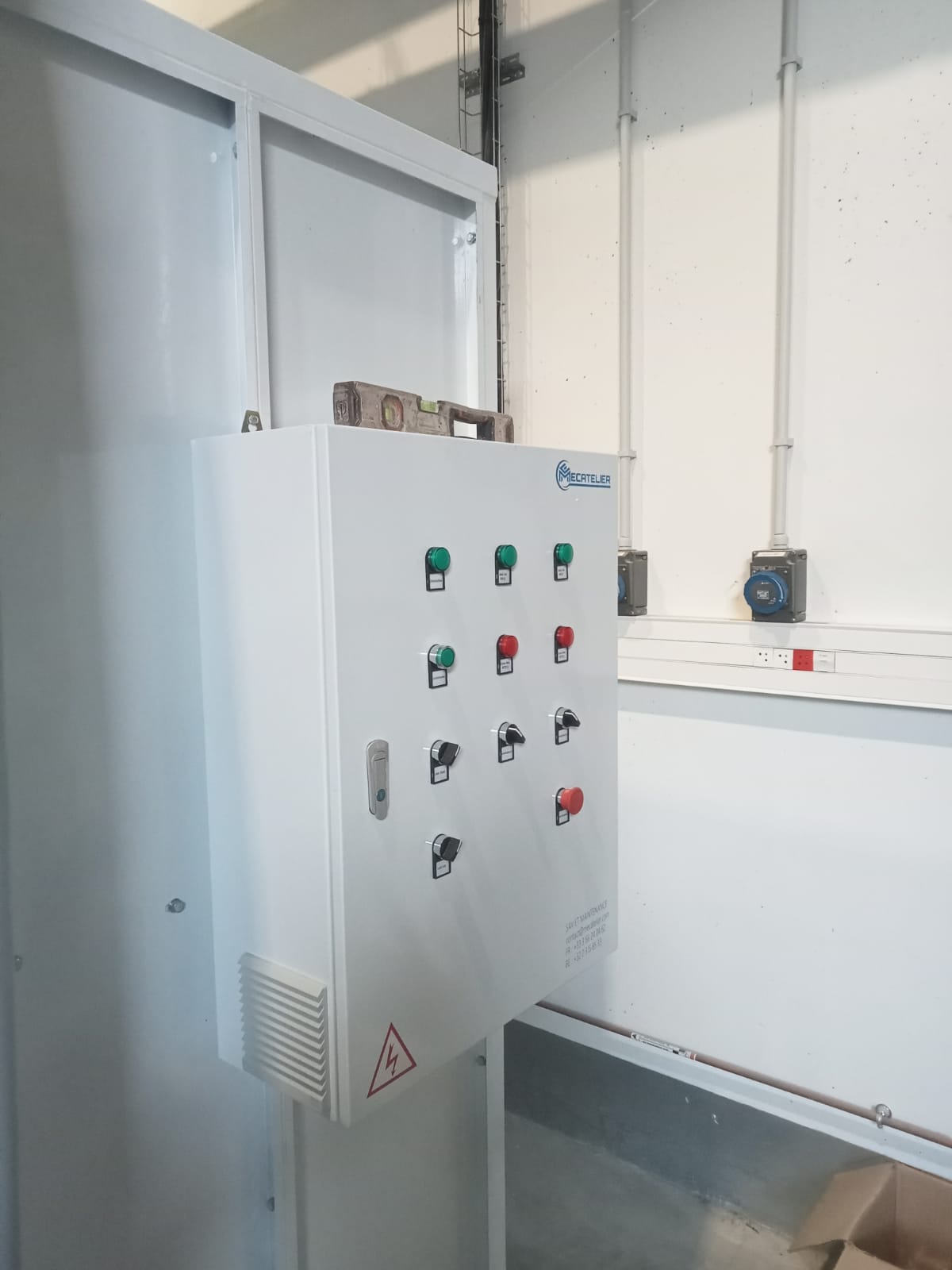
In body shops, it frees up the booth
This is the most common use: the extraction wall complements the booth, it doesn’t replace it. It takes on preparation and touch-up work, which ties up the booth without needing its performance.
The gain is twofold. The booth stays available for the work that justifies it, and preparation stations stop spreading overspray throughout the workshop.
Depending on the space you have
Each extraction wall is sized to your workshop: available floor space, ceiling height, type of work, production volume. We survey the layout before proposing anything.
The layouts below are the most common; they are not a closed catalogue.
Against a wall
against an existing wall, the simplest configuration
In a corner
to make use of a corner of the workshop that served no purpose
Modular
several modules assembled to cover a wide working width
Combined
with a preparation area or a sanding station
Frequently asked questions
What we are asked before choosing between a wall and a booth.
What is the difference between an extraction wall and an extraction booth?
The two terms often refer to the same equipment. An extraction wall is an open workstation whose filtering wall faces the operator; people sometimes speak of an extraction booth when side walls define the work area. In both cases, the equipment captures without enclosing, unlike an enclosed paint booth.
Does an extraction wall replace a paint booth?
No, it complements it. The extraction wall captures overspray but doesn’t condition the surrounding air: no enclosed space, no filtration of incoming air, no curing. For a demanding finish, an enclosed booth is still necessary.
Can it be installed in an existing workshop?
Usually, yes, and that’s even one of its advantages: the floor footprint is small and installation is simpler than for a booth. We first look at the floor space, the available height and the options for discharging air.
What happens to the extracted air?
It passes through the filtering wall, which traps the paint particles, then it is extracted. How it is treated and discharged depends on your installation and the regulations that apply to your site; we work these out with you.
Do you handle installation and maintenance?
Yes. We take care of on-site installation as well as filter replacement, which directly determines how well it keeps capturing over time.
An extraction wall project?
Tell us about your workshop and the type of work you do there. We’ll propose the right configuration — and tell you if a booth would be a better fit.


